Japan
When the fields hold the sky
An evening on the Tango Peninsula, and a reflection on the water, rice and landscapes that shape rural Japan.
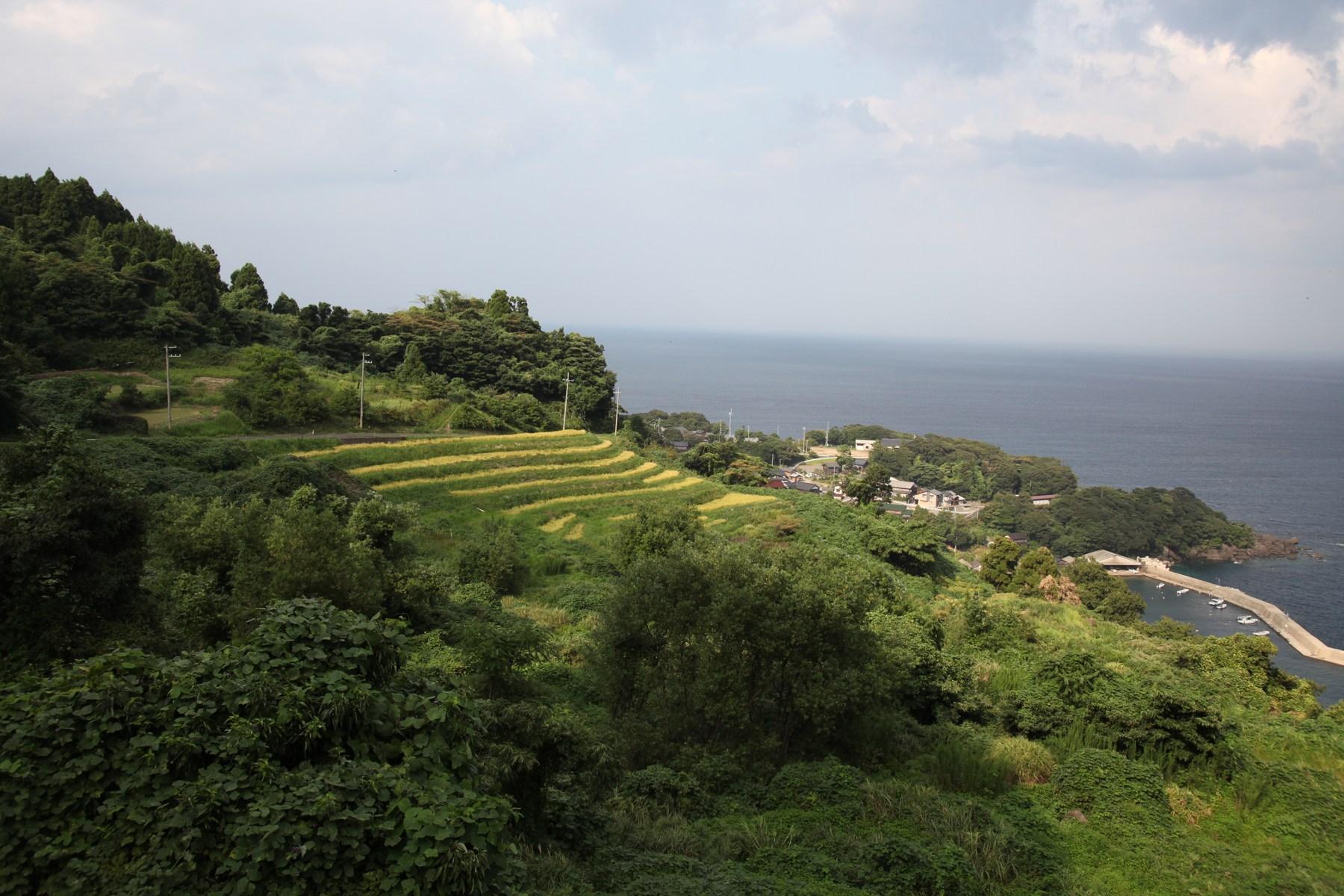
I came across the Ni'i rice terraces almost by accident, on a road trip around Ine and the Tango Peninsula. We had spent much of the day following the coast, stopping at small towns and viewpoints along the Sea of Japan, before reaching the paddies toward evening. By then, the light was beginning to soften and the flooded fields were reflecting the sky. With the sea just beyond them, it was one of those views that seemed to capture two things I love about rural Japan at once: rice paddies and the Japan Sea.
Rice fields are such an ordinary part of the Japanese landscape that, after a while, it becomes easy to stop noticing them. Travel outside the largest cities and you will find them everywhere: squeezed between houses, filling broad valleys, climbing hillsides in terraces, and sometimes appearing surprisingly close to the middle of town. Many are relatively small plots, cultivated by individual households and local farmers rather than belonging to the enormous farms you might picture elsewhere. They are beautiful, although anyone who has lived beside one can also tell you about their less romantic side. Flooded paddies around residential areas make very good breeding grounds for mosquitoes.
Their ubiquity reflects just how deeply wet-rice agriculture has shaped Japan. Paddy cultivation spread through much of the archipelago thousands of years ago, and growing rice required communities to manage water, irrigation, planting, and harvesting together. The result is that rice paddies became more than somewhere food was grown. They helped shape village landscapes, local cooperation, seasonal rhythms, and eventually many of the images we now instinctively associate with the Japanese countryside.
Water, unsurprisingly, is central to all of this. One of the interesting things about travelling along the Sea of Japan is how different its climate can be from the Pacific coast. In winter, cold winds blowing from the Asian continent cross the relatively warm Sea of Japan, absorb moisture, and dump enormous quantities of snow on the mountains and coastal regions of western and northern Honshu. The mountains block much of that moisture from reaching the Pacific side, which is why a winter day can mean deep snow in places along the Japan Sea and blue skies on the other side of the mountains.
That snow is also part of the story of some of Japan's great rice-growing regions. Niigata is the obvious example. Its famous rice is supported by broad plains and major rivers, but also by the huge winter snowpack in the surrounding mountains. In spring, that snow melts and feeds rivers and irrigation systems, carrying water down into the paddies. Niigata Prefecture itself points to this combination of snowmelt, fertile soils, rivers, and the temperature difference between day and night as part of what makes the region so well suited to rice.
Ni'i is much farther west, in Kyoto Prefecture, but standing there made me think about that relationship between water, rice, and the landscape in a way I hadn't before. The paddies weren't simply a foreground for the view of the sea. They were part of the landscape's history.
And at sunset, they were spectacular. The water turned the individual fields into mirrors, breaking the evening light into dozens of irregular shapes running down toward the coast. After a day of driving around Ine, with plenty of places to stop along the Sea of Japan, this ended up being one of the highlights.
It is exactly the kind of place I like finding in Japan: not necessarily somewhere that requires an entire day, but somewhere worth building into the journey. If you're driving around Ine and the Tango Peninsula, I would time the Ni'i rice terraces for late afternoon or evening. The landscape does most of the work.
Sources & Further Reading
- Japan Meteorological Agency. “General Information on Climate of Japan.” Japan Meteorological Agency. https://www.data.jma.go.jp/cpd/longfcst/en/tourist_japan.html.
- Ministry of Agriculture, Forestry and Fisheries of Japan. “Japanese Culture of Paddy Field Cultivation.” Ministry of Agriculture, Forestry and Fisheries. https://www.maff.go.jp/j/nousin/kaigai/ICID/event/pdf/country_position.pdf.
- Ministry of Agriculture, Forestry and Fisheries of Japan. “Rice Culture Nurtured by the Natural Environment.” Ministry of Agriculture, Forestry and Fisheries.
- Niigata Prefecture. “Niigata Rice.” Niigata Prefecture. https://www.pref.niigata.lg.jp/sec/syokuhin/niigatarice.html.