Japan
Living Beneath Daimonji
Life around Kyoto University’s Yoshida Campus, a café above the trees, and the mountain that became part of an ordinary day.
When people think about Higashiyama, they usually think south: Kiyomizu-dera, Ninenzaka, Gion and the streets around Yasaka Shrine. But when I lived at Kyoto University, my Higashiyama was farther north.
I lived around the university's Yoshida Campus, and the mountain was always there.
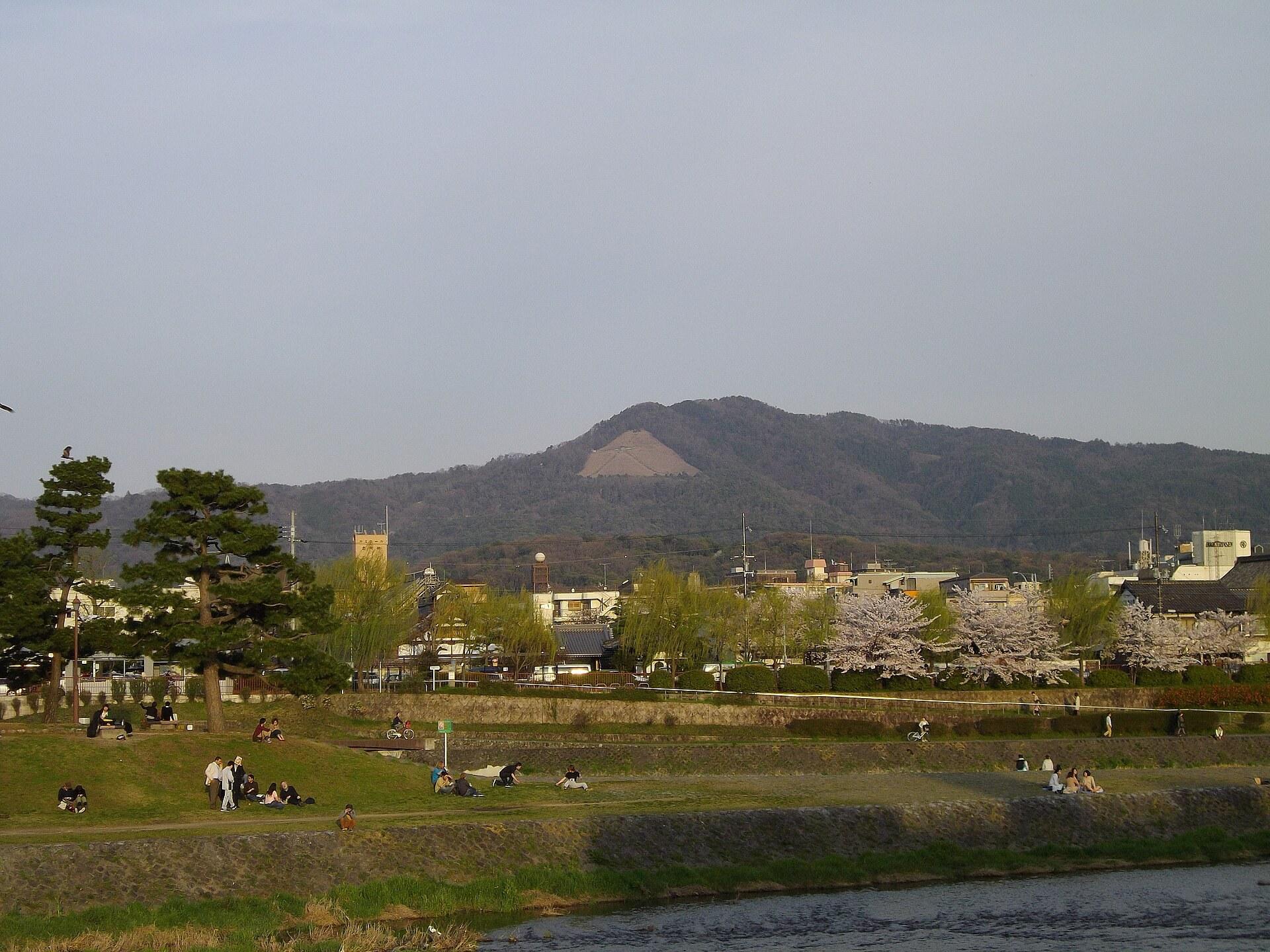
Daimonji rises immediately behind the neighborhoods east of the university. You can see the enormous 大 cut into the mountainside from all over northern Kyoto, including from around campus. After a while, it becomes one of those landmarks you barely consciously notice. It simply tells you where you are.
That part of Kyoto became home to me through repetition rather than sightseeing. I would wander up through Yoshida Shrine without much of a plan, climb Yoshida-yama to spend some time at Mo-an, or, when the weather was right, keep going east toward the mountains.
There is quite a lot of history packed into what feels like a very ordinary university neighborhood.
Kyoto University was founded as Kyoto Imperial University in 1897, the second imperial university established in Japan. Yoshida has been its center ever since. The university began with science and engineering before adding law, medicine and letters, and the campus gradually expanded into the collection of buildings that exists today. Some of its oldest brick buildings survive alongside laboratories and much newer university buildings, with the Clock Tower, completed in 1925, sitting at the center of it all.
Living there, though, I rarely thought about the campus as a historical site.
It was simply Kyodai. Students on bicycles, crowded cafeterias, convenience stores, classrooms and research buildings. That is one of the strange pleasures of living somewhere with as much history as Kyoto: things that would be destinations elsewhere become the background to your day.
Yoshida Shrine was one of those places.
It sits almost directly behind the university, climbing into the trees of Yoshida-yama. The shrine is much older than the university below it. It was founded in 859, when Fujiwara Yamakage enshrined deities from Kasuga in Nara here as protectors of the capital. Centuries later, the priest and scholar Yoshida Kanetomo developed Yoshida Shinto here, and the shrine became an important center of Shinto thought and authority.
You don't need to know any of that to enjoy walking through it.
That was part of what I liked about Yoshida Shrine. I could leave the university and, within minutes, be under the trees and climbing stone steps. Sometimes I would go there deliberately. Other times it was simply a nicer way to walk somewhere.
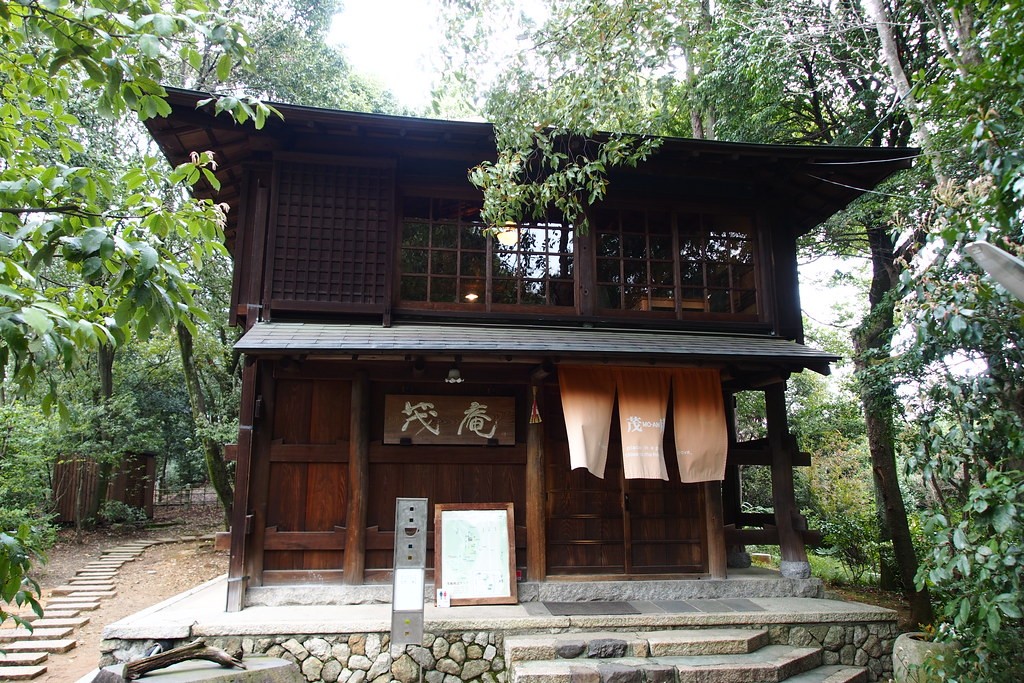
Keep climbing and you eventually reach the top of Yoshida-yama. Hidden among the trees near the summit is Mo-an.
Mo-an became one of my favorite places to disappear for a while. You have to walk to get there—the café sits close to the top of the hill, with no road taking you all the way to its door. That little bit of effort is part of its charm. By the time you arrive, the university and the streets below already feel farther away than they really are.
It was a place to sit, have some tea, look through the windows over Kyoto and do very little.
That is probably what I remember most fondly about living around Yoshida. Kyoto can sometimes feel almost overwhelmingly full of things you are supposed to see. Around the university, I started appreciating places where there was nothing in particular I was supposed to be doing.
Daimonji was the bigger version of that.
On crisp autumn mornings, I loved walking up the mountain. From the university area, you can head east toward Ginkaku-ji and then leave the city surprisingly quickly. Houses give way to trees, the path starts climbing, and eventually you reach the huge fire bed that forms the 大 visible from the city below.
The character is part of Gozan Okuribi, one of Kyoto's great annual traditions. Every August 16, five enormous bonfires are lit on the mountains surrounding Kyoto. Daimonji is the first. The fires mark the end of Obon and are associated with sending ancestral spirits, who are believed to have returned during the festival, back to the other world.
Exactly when the tradition began is uncertain. Kyoto's official tourism authorities note that there are several theories about its origins, but that it appears to have become established as an annual event sometime between the Muromachi and Edo periods.
For most of the year, though, there is no fire.
There is just a mountain.
And that was the Daimonji I knew best. In autumn, the air could be cold enough in the morning that the climb felt particularly good. Once you reached the 大, the trees opened and Kyoto spread out below you. From up there, you could make out the grid of the city and the mountains enclosing the basin. The university was somewhere down there too.
Then you walked back down and carried on with your day.
Those mornings probably shaped my relationship with Kyoto more than many of its famous sights did. I love Kiyomizu-dera and Fushimi Inari and all of the places people cross the world to see. But living in a city inevitably gives you a different collection of places: the shrine you walk through because it is on the way, the café you retreat to when you need an afternoon to yourself, the mountain you climb because the weather happens to be beautiful.
If you find yourself around Kyoto University, give yourself some time to wander beyond the campus. Walk behind the university and through Yoshida Shrine. Climb Yoshida-yama and stop at Mo-an. Or continue east, past the neighborhoods around Ginkaku-ji, and head up Daimonji.
None of them needs to be treated as a major sightseeing expedition.
That is rather the point.
Sources & Further Reading
- Kyoto City Official Travel Guide. “Gozan Okuribi Bonfires.” Kyoto City Official Travel Guide. https://kyoto.travel/en/travel-inspiration/gozan-okuribi-bonfire/.
- Kyoto City Official Travel Guide. “Yoshida Shrine.” Kyoto City Official Travel Guide. https://ja.kyoto.travel/tourism/single02.php?category_id=9&tourism_id=155.
- Kyoto University. “History.” Kyoto University. https://www.kyoto-u.ac.jp/en/about/history.
- Kyoto University. “Yoshida Campus.” Kyoto University. https://www.kyoto-u.ac.jp/en/about/profile/campuses.
- Mo-an. “Mo-an.” Mo-an. https://mo-an.com/.